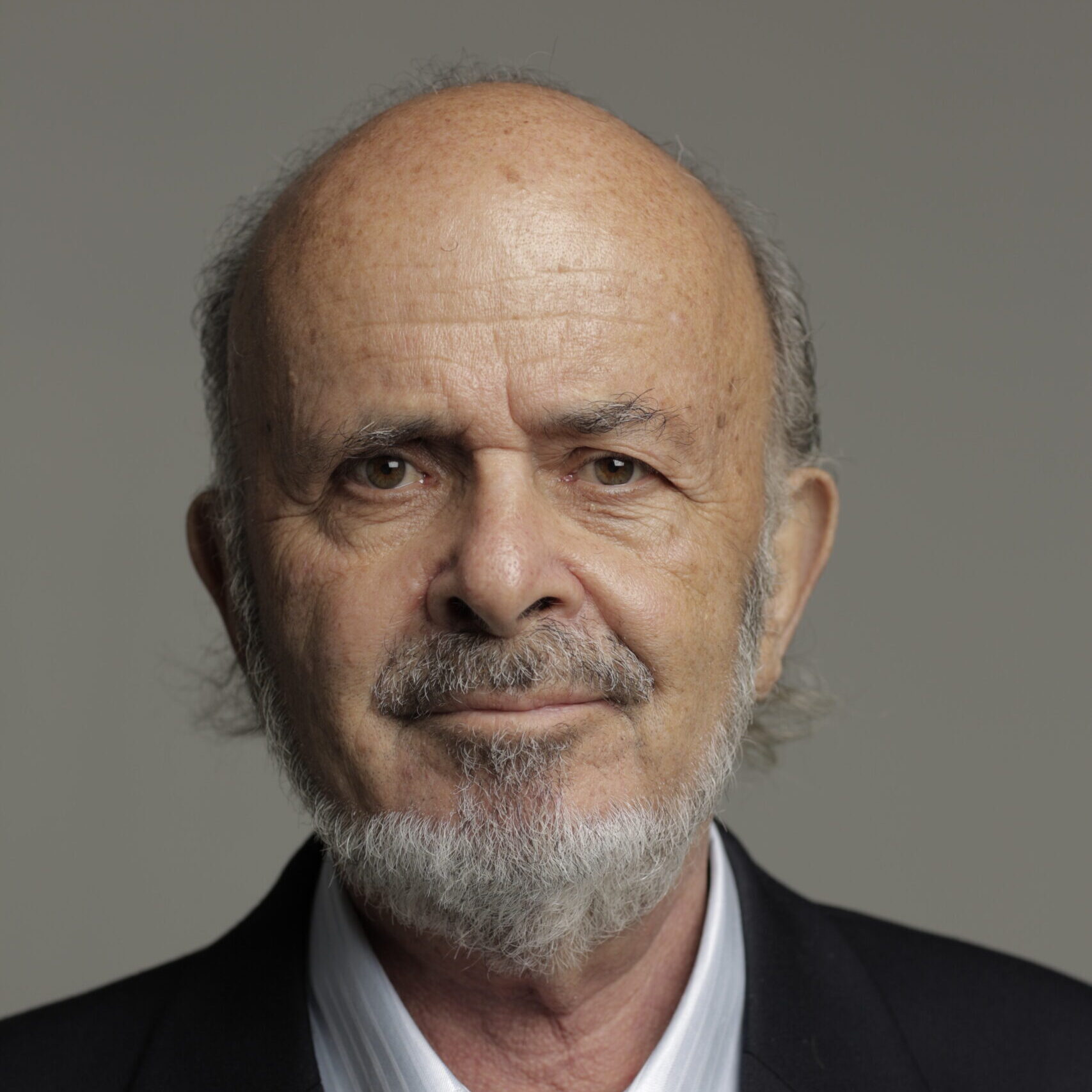
When most people begin to think of Mordecai Kaplan, they start with his concept of “Judaism as a civilization.” Unfortunately, many end there. Even those who have studied Kaplan and who emphasize Kaplan’s concept of group life, which underlies his total approach, often fail to dig deeper into his thinking. I propose that perhaps, more than “civilization,” the concept of “democracy” was essential and basic to Kaplan. In order to totally understand his commitment to democracy, it will be helpful if we also return to his “rebbe,” the philosopher John Dewey.
The Rise of Nazism
But first, the matter of democracy.
Kaplan only gradually adopted a positive attitude toward democracy. In the early years, during World War I and faced with the assimilation of recently arrived Jews into American culture, he saw democracy as a threat. Many thought that there was no function for Judaism when everything was allowed. In America, people were served by the state, rather than attacked by it, as they had been so frequently in the old country. Kaplan stated this in a series of articles he published in the Menorah Journal, a new vehicle aimed at intellectually capable young Jews.
Put simply, it took the rise of Nazism and the war itself to bring out the complete democrat in Kaplan. At a professional meeting some years ago, Michael A. Meyer, professor of modern Jewish history at Hebrew Union College, challenged me to explain how Kaplan developed in his thinking. Professor Meyer did not see any real development in Kaplan’s system. The point is that we certainly do see a fundamental development particularly in the area of democracy. During World War II, he came to believe that the only way to counter fascism was to turn democracy into a religion. Democracy becomes not only a political concept in Kaplan’s mind but an ethical ideal.
Not by might
For Kaplan, democracy relates to prophetic consciousness. More than once in my initial interviews with him, he declared to me that a verse from Zachariah was the most essential verse in the Torah. Not “Love thy neighbor” and not even the Shema, but the rejection of force was the key to the divine in our lives. Kaplan preference for this verse is by now familiar to Kaplan people. The ideal is not easy, especially during a war, but it is a signpost that should guide us in the direction we must pursue.
In Kaplan’s words, on Dec. 24, 1942:
The contribution which Judaism has made and should continue to make to democracy, and the American way of life is best summarized in the motto enunciated by the prophet Zachariah (4:6). “Not by might nor by power but by my Spirit saith the Lord of Hosts,” and to add the supplement of Hillel’s famous summary of Judaism, “the rest is commentary, go and learn.”
Kaplan continues:
That motto means that the criterion of human good, of that which renders life worthwhile, should not be power, bigness, but the extent to which it expresses the spirit of God. Democracy begins with the refusal to bow before might, to glorify and worship mere force. The only thing that deserves respect, admiration, is that which has in it a spark of the divine spirit and the extent that it has it. (Kaplan Diary, Communings, vol. III, p. 149)
Kaplan’s writing is often very wordy and obscure, but the clarity of his convictions shines through in this passage. It perhaps indicates the depth of his feeling. Kaplan did not join in demonstrations, as did his colleague, Abraham Joshua Heschel, but it must be emphasized that he spent his work life (more than 50 years) training and influencing Conservative rabbis to see the democratic ideal as central to Judaism.
Fulfillment of the individual
Kaplan’s belief in the centrality of democracy is evidenced by his emphasis on the fulfillment of the individual. Very much the man of the group, Kaplan in the privacy of his diary spent much time and effort thinking about individualism. In all my years of studying the diary, I find relatively little on “civilization” and much more on individualism.
Kaplan came to believe that the only way to counter fascism was to turn democracy into a religion. Democracy becomes not only a political concept in Kaplan’s mind, but an ethical ideal.
I am sure I will be misunderstood here because so many believe that our attention to the individual is at the root of the evils of modernity. There are many statements from Kaplan about the fundamental importance of individualism. But he never stopped there and always related individualism to the group.
The context of the statement below is important. Kaplan in the late 30s was in Jerusalem teaching at the Hebrew University in the Department of Education. The British government had just issued the White Paper, which restricted Jewish immigration into the holy land at 75,000 over the next five years. Obviously, such a restriction in the face of the rise of Nazi power in Germany was intolerable. The Yishuv (Jewish community in Palestine) was up in arms, but Kaplan argued from a more philosophic stance. Here, he chooses to declare his belief that Jewish existence means the support of reason and the rights of the individual, Arabs as well as Jews. He writes (May 17, 1939):
I still believe that before all else we Jews ought to answer ourselves the question: To what end? What are we Jews for? Without some kind of a satisfying answer, our condition ceases to be even tragic and becomes completely meaningless. …
It is man’s function to assert the right of the mind to exist. So, it is the Jew’s function to assert the right of human individuality, which is the most important expression of the mind. The minority status to which Jews seem to be condemned is the opportunity which the Jews must exploit to affirm the right of the human being to be something else besides being a creature of the herd, to be himself. This human dignity, which it has fallen upon the Jew to defend, is what the Jew should live for as a Jew. (Kaplan Diary, Communings, vol. II, p. 156)
The issue is how do we relate Kaplan’s individualism, which is at the heart of his democratic consciousness, to his concern with the group? It is here that Dewey becomes useful.
The individual as foundation of group life
First, it is well to remember that Kaplan used the concept of Reconstruction before 1920 and Dewey’s book, Reconstruction in Philosophy, which appeared in the ’20s. Rather early on, Kaplan states his belief that a renaissance [his word] of Judaism is a vital necessity. In November 1907, in an early diary entry, he begins to think of working on a new project. At the head of the diary page regarding a possible book, he enters the title, “Judaism Reconstructed.” He then continues to describe his project: “The object of this book is to examine how far Judaism is on the decline and secondly to inquire into the possibility of reviving it.” More than 20 years were to pass before the book in question could be written, but the beginning is there in Kaplan’s mind and in his early diary.
Thus, Kaplan’s thinking of the need to reconstruct Judaism existed long before he discovers Dewey. Most importantly, he finds Dewey confirming. Dewey aids him in deepening his thinking.
Democracy begins with the refusal to bow before might, to glorify and worship mere force. (Mordecai Kaplan)
Kaplan begins to refer to Dewey in the mid-1920s. On June 9, 1931, he notes in the diary that he has been reading Dewey’s Individualism Old and New. This work deals precisely with the problem of the relationship between Dewey’s concern with the individual and his commitment to the vital relationship of the individual to the group. Dewey points to the old individualism going back to Emerson, for whom the individual is an isolated phenomenon. But Dewey argues that in present-day industrial society, the individual can be the foundation of group life. He advocates associations that are democratic in practice, cooperative in nature, and focused on the shared growth and actualization of human potential, rather than individual accumulation of wealth and private interests.
Kaplan made the point powerfully in a diary entry in 1956. For Kaplan and for Dewey, one might say that to grow is at the core of being alive. Kaplan wrote in the diary in the summer of that year: “Mental and spiritual growth ‘is not a luxury but a necessity.’ ” Citing William James, he asserted that “human beings at best actualize but a small fraction of their latent capacities.” The actualization of our capacities, both moral and personal, is thus for Kaplan at the core of happiness, and one of the primary goals of religion and Judaism.
Compassion, concern for the other, justice and equality
The next obvious question is “growth toward what?” The answer is not hard to find. The ideals, which is to say the goals and signposts are right there — compassion, concern for the other, and in terms of society — justice and equality and the recognition that everyone, yes everyone, has the inalienable right to grow to the maximum of their capacities without infringing on the rights of others.
Dewey himself states it well when he says: “The good for any man is that in which the welfare of others counts as much as his own.”
Kaplan himself summarizes the ideals which are the essence of his thinking:
Growth, becoming effective, becoming fully human, achieving life abundant and making the most of life. All these are reflective of the will to live. (Kaplan Diary, Oct. 2, 1942.)
And, of course, as Jews, we should use all the community resources to grow personally, as well as a community and as a people. Our efforts must be directed toward reconstructing our rituals, our liturgy and our sacred texts in terms of growth. Kaplan began the process, and we must be dedicated to continuing it.