Rethinking Chosenness: A Dialogue for Our Time
“Chosenness” has been both a source of pride and discomfort in Jewish life. What does it mean to be a “chosen people” in an age of equality, interconnection, and moral responsibility? This Evolve series invites a deeper look — not to settle the question, but to open it. We’ll explore how the idea of chosenness can evolve into a call toward purpose, justice, and shared humanity.
Discover New Evolve Essays on Chosenness:
Chosenness, rightly understood, should make Jews more committed to the dignity and flourishing of non-Jews, not less.

My understanding of chosenness develops from the perspective of those excluded from the Enlightenment’s putative universalism.

To ensure a passionate and distinctive Jewish future, we should reclaim our foundational metaphor of “chosenness.”

It is important to reconstruct even the most problematic concepts that we have inherited rather than to try to excise them.
It is problematic when my claim to uniqueness is such that I lose the ability to hold or respect yours.
God’s invitation to be a nation of priests is an aspiration rather than a firm promise of our indispensability.

How might we reclaim some of the value of the priestly and levitical roles?

The fundamental flaw is not the arrogance of the claim, troublesome as it is, but that the claim requires that there was a Divine chooser who made a choice.
by
Roger Price

The belief that Jews are Chosen risks promoting Jewish chauvinism and even racism.

Rabbi Mordecai Kaplan’s arguments against chosenness still ring true.
Past Perspectives on Chosenness From Evolve:
First published in The Reconstructionist, September 1984, pp. 8-27


First published in The Reconstructionist 50/7, June 1985, pp. 9-14

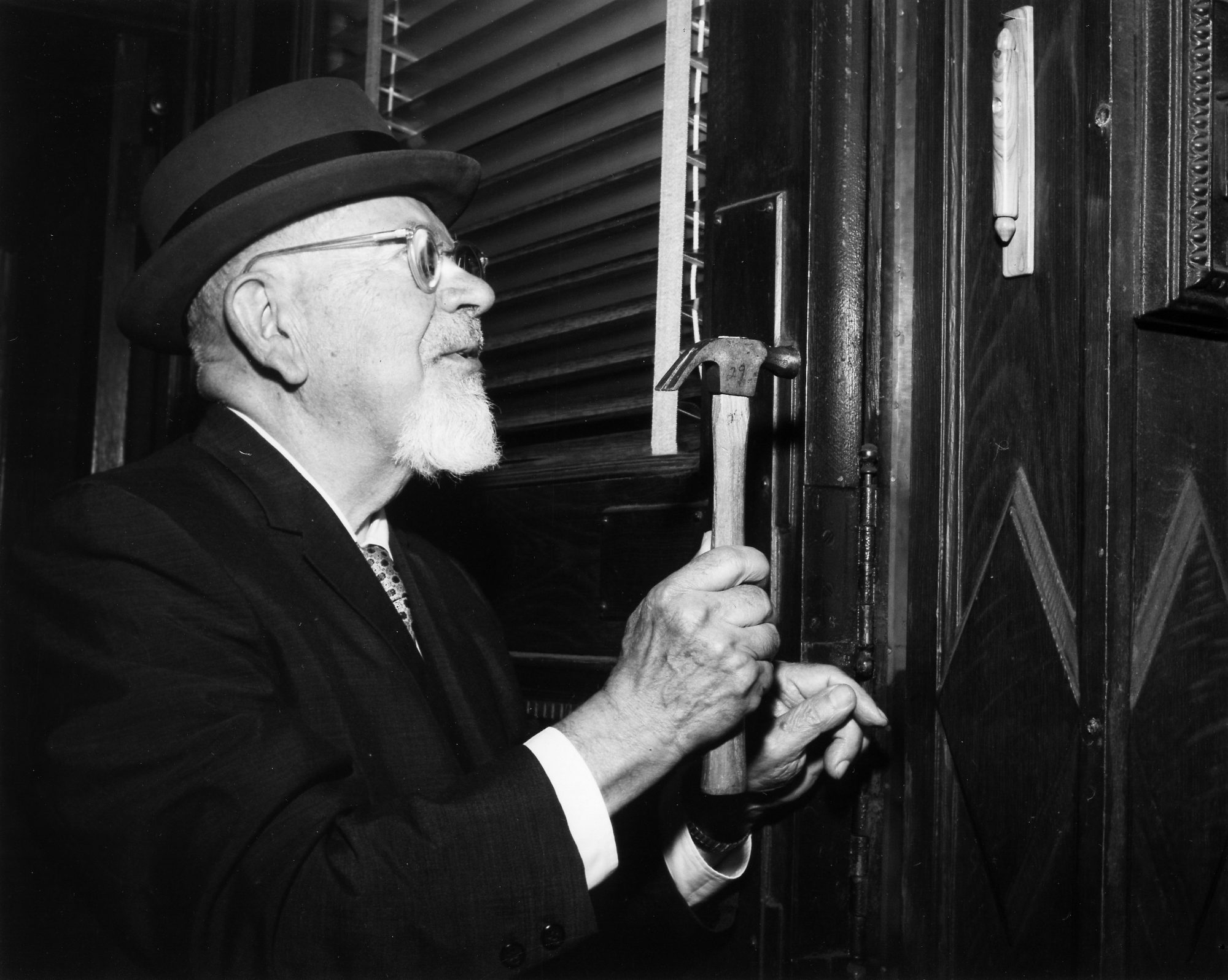
First published Mordecai Kaplan's 1948 book, The Future of the American Jew

The sonic world all around us reminds us of the agency of the creatures that are its creators.

With tenderness and love, we should encourage our community to confront the idea of chosenness and release it as no longer serving us well.

Join the Conversation
Is the claim that Jews are the Chosen People important to your identity? Do you find it objectionable? Why?




7 Responses
Thank you Rabbi Armin for this thought-provoking essay. As a life-long member of the Reconstructionist community with an awareness of this key Kaplan philosophy, I need to let this sit in my brain and move it around and discuss further.
Reading this and other thoughtful and provocative recent (late 2025) essays on this theme of chosenness leaves me with at least one significant concern. I wonder if in fact there are two questions underlying current responses to chosenness.
One question or set of questions is an internal (Reconstructionist or other community) question: what words can we we say with integrity, about our Jewish identity either through traditional prayer texts or revised wording? What can we re-interpret in a way that is meaningful and also accessible to newcomers, visitors, etc? (I am not fond of dodgy English translations that obscure the meanings of Hebrew texts such as the festival kiddush — traditionally praising God “who has chosen us from among the peoples, exalting us above people of all languages….” Similarly, the traditional wording of aleinu is very hierarchical, despite apologetic efforts to say that it means something like “we are all unique.” [A number of recent prayer books including the newest Reform and Masorti/Conservative siddurim from Israel either discard or offer one or more alternatives to the traditional aleinu wording.]
The second question, beyond our own movement or congregation’s prayers–our internal prayer structure– is wrestling with thousands of years of Jewish tradition (Tanakh, Talmud, etc) that is based on chosenness. To give a brief parallel, it is not enough to say, “We reject patriarchy in Judaism and reject mistreatment of women/non-binary people. Well, that issue is solved.” Even if we change and watch our own attitudes and texts, we continue to read and study Torah (literal and wider meaning) that is filled with contrary assumptions.
Many groups believe that they are chosen, not just Jews. For example: According to the Enuma Elish (a creation epic), Babylon was chosen by their patron god Marduk to be the home of the gods. Athens was said to have been chosen by both Athena and Poseidon, who had to compete to become the city’s patron god. Rome was chosen to become a great empire by Venus through her son, Aeneas, the progenitor the Roman people. The Aztecs believed they were chosen by their patron god Huitzilopochtli, who led them through the wilderness and showed them where to build their city of Tenochtitlan. The Dalai Lama described Tibetans as being chosen by the bodhisattva Chenrezig (Avalokiteshvara), of whom the Dalai Lama is believed to be an incarnation. The Maasai of East Africa believe they were chosen by the supreme God Ngai to herd all the cattle in the world. The Ethiopians claim to have been chosen by the Angel of the Lord to steal the Ark of the Covenant (and the Jewish covenant itself) from Solomon’s Temple, according to the Kebra Nagast (the national epic of Ethiopia). The Christian Church also claims to supersede Israel as the new chosen people of God, as do many of the other supersessionist religions that followed suit. And in Islam, the Surah al-Hajj, verse 78, says: “And strive hard in (the way of) Allah as you ought to strive for him. He has chosen you and has not laid upon you any hardship in religion; the faith of your father Abraham (is yours).”
I’ve never been comfortable with the idea of Jews as a “chosen people.” My parents had escaped Nazi Europe, and period news of the deaths of our wider family was a strong part of my childhood. I also grew up in Kansas, where my sister and I were the only Jews in our elementary school. Most important, my father had angrily turned away from “the God who apparently snoozed through this devastation.”
Although I’ve had decades to transcend my father’s anger, I’m not an observant Jew by any traditional definition, and I don’t accept the notion of Jews as “chosen.” Most offensive, I suppose, is the hierarchy among peoples that it suggests–not so different from the belief in American exceptionalism among many in the U.S.
On the other hand, I have pursued my “chosen” career, and feel that choice as an inner calling to put my thoughts into words. I can also imagine that many others feel the pleasure in pursuing their chosen work or careers, even as I’m aware of the pressures on most people the world over to simply find food and shelter for themselves and their children, and the relatively privileged life that enables the leisure in which to discover one’s own deep gifts and needs.
Carol Ascher
ascher.carol@gmail.com
website: http://www.carolascher.net
When I was younger the idea of being “the Chosen people” made me a little uncomfortable because it brought attention to me as a Jew. And attention is not something that I wanted as a Jewish person, it made me feel threatened. But as I grew and studied more and understand more of the mystical, biblical and historical meaning of being “chosen” I take deep pride in it. It never meant superiority. That is an imposed meaning, like the current definition of Zionism. It means that we were plucked from other peoples — with all our faults (of which there are many) to believe and live a life which celebrated the Oneness of Hashem. Hashem chose us for that and we chose this path. And being “chosen” for this has not been an easy or kind, smooth or peaceful decision. But we hold on to it with all we are. We insist on this truth as a breath: the choice is the choice of relationship. Of love. It doesn’t lessen any other people, they have their path. We have ours. And I do think we have suffered from it. If the word “chosen” is offensive, it’s offensive to those who have a problem with Jews. Maybe in the depth of the Spanish prisons, or the concentration camps or the Hamas tunnels this relationship saved some souls. Knowing this special relationship we have, this deep commitment to Love is ours in its uniqueness. And that takes nothing from anyone else, but it is something of value to us. That is what I think being Chosen means.
In the extrinsic conversations of open society, the claim that Jews are the “Chosen People” is solipsistic in a cultural sense and offensive. In the ancient world, religion was a tribal matter, for Jews as well as other groups. The literacy of Judaism transported Jewish consciousness over vast evolutionary ground in terms of cultural, social, and political history, over thousands of years. But within the tribal essence of religion, all tribal religions were — in their self-perception — the chosen people of their original, geographically and culturally isolated ‘gods’. The tribal god or gods of a people, during pre-modern unconsciousness of the variety of cultures and diversity of the World were the creations and, in their cultural complexes of religious creation, the supernatural choosers of the peoples who created them. This is the essence of Jewish ‘Chosenness’ as well, except that the original “people of the book” arrogated to themselves a ‘Chosen’ status that illegitimately transcended the modern, interconsciousness of diverse peoples, across a World impossible to know by the primitives of thousands of years ago. Thus, as might be described in Feuerbachian terms, every ancient religion was ‘chosen’ by the god or gods postulated and promulgated internally by that religion, as a cultural institution of a particular people defined in time and location. To expand the notion of being a “Chosen People” beyond the internal, cultural consciousness of Jews and Jewishness was always a logically invalid notion, in the modern perspective of cultural anthropology. As such, it bears some similarity to the demand by fundamentalist Islam that all of the World respect its standard of blasphemy, subject to penalty exacted regardless of the location or cultural identity of those deemed ‘blasphemers.’
Yeshayahu Leibowitz, Israeli philosopher, known as the “conscience of Israel”, was what I’d call a spiritual iconoclast who warned his government that the Occupation of the Palestinians would be Israel’s downfall. I highly recommend his book Judaism, Human Values, and the Jewish State. In it he states: “The uniqueness of the Jewish people is not a fact, it is an endeavor. The holiness of Israel is not a reality but a task. The uniqueness of the Jewish people is a direction and a target. The people of Israel were not the chosen people but were “commanded” to be the chosen people. The Jewish people has no intrinsic uniqueness. Its uniqueness rather consists in the demand laid on it”.